Source Integrated Ce Dental Surgical Station for Clinics
Explore 30 options for the integrated ce dental surgical station. Compare features like LED lighting, sterilization compatibility, and mobility to find the right unit for your clinic or hospital setup; compare the available evidence and request quotations based on your requirements.
Key considerations
Products List




Comprehensive Sourcing Guide
Integrated Ce Dental Surgical Station Sourcing Guide
Procuring an integrated CE dental surgical station requires a rigorous evaluation of both mechanical robustness and optical clarity, as these units serve as the central hub for complex clinical procedures. Buyers must prioritize stations that offer multifunctional integration, ensuring that the dental chair, handpiece holders, and illumination systems operate in seamless coordination. The observed market data indicates a wide variance in specifications, ranging from basic mechanical setups to advanced models featuring dual-purpose LED lighting and stainless steel chassis for enhanced durability. Understanding these distinctions is critical for aligning procurement with specific clinical workflows, whether for pediatric or adult patient care.
The decision-making process must also account for the physical footprint and operational mobility of the unit. Listings reveal diverse standard dimensions, from compact configurations measuring approximately 143 by 103 centimeters to larger units occupying up to 1.8 cubic meters of space. Buyers should verify the mobility features, such as footswitch controls and rotatable components, to ensure ergonomic efficiency for the dental team. Furthermore, the presence of safety switches and specialized lighting, such as yellow and white dual-purpose lamps, directly impacts procedural precision and patient comfort, making these technical attributes non-negotiable in the selection criteria.
Product Scope and Observed Listing Signals
The current market landscape for integrated dental surgical stations presents a heterogeneous mix of product attributes, reflecting varying levels of customization and technological integration. Observed listings highlight models with distinct characteristics, such as the A9 and A8+, which emphasize luxury styling and multifunctional capabilities. These units often feature wooden crate or standard crate packaging, indicating a need for careful logistics planning to prevent damage during transit. The presence of machinery and electricity as power sources suggests that these stations are designed for high-volume clinical environments where reliability and continuous operation are paramount.
In contrast, other observed products, such as the B-POL model, exhibit specialized optical features like polarizing microscopy principles and cylindrical lenses, which may indicate niche applications or specialized diagnostic integrations within the surgical station. These variations underscore the importance of verifying the exact model specifications before procurement. Buyers should note that while some units are marked as non-customized, others offer available customization options, allowing for tailored solutions that fit specific clinic layouts or procedural requirements. This diversity necessitates a detailed review of each product’s unique selling points to avoid mismatches between supplier claims and actual clinical needs.
Technical Specifications to Verify
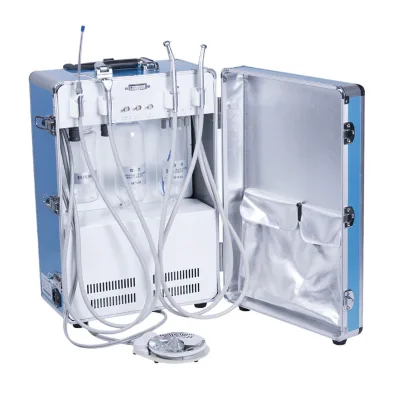
When evaluating the technical specifications of a dental surgical station, buyers must scrutinize the illumination and optical systems, as these directly influence surgical precision. The presence of 12V/20W halogen lamps or dual-purpose LED lights is a key differentiator, with the latter offering energy efficiency and reduced heat emission. Additionally, the inclusion of features like rotatable dental handpiece holders and stainless steel multi-function footswitches enhances operational flexibility. Buyers should verify the material composition of the chassis, ensuring it meets hygiene standards and provides long-term durability against frequent cleaning and disinfection protocols common in dental practices.
Furthermore, the mechanical and structural specifications require careful assessment to ensure compatibility with existing clinic infrastructure. Dimensions such as 144 by 103 by 108 centimeters or larger volumes like 1.8 cubic meters must be cross-referenced with available floor space and door access points. The power source requirements, whether machinery-driven or electric, should be confirmed against the clinic’s electrical capacity. Buyers should also inquire about the specific model numbers, such as A6 or A7, to access detailed technical manuals and ensure that all components, from the chair to the illumination units, are designed to work in unison without interference.
Compliance and Safety Documentation
Compliance with international safety and quality standards is a non-negotiable aspect of sourcing dental surgical stations, particularly those marketed with CE certification. Buyers must request and verify official documentation proving adherence to relevant medical device directives, ensuring that the equipment meets stringent safety requirements for electrical and mechanical components. The presence of ISO certifications, such as ISO 13485 for quality management systems, provides additional assurance of the manufacturer’s commitment to consistent quality and regulatory compliance. These documents are essential for risk mitigation and for ensuring that the station can be legally installed and operated in various jurisdictions.
Safety features embedded within the station’s design must also be thoroughly documented and verified. This includes the presence of emergency stop mechanisms, safety switches, and proper grounding systems to prevent electrical hazards. Buyers should review the user manuals and safety guidelines provided by the supplier to understand the operational limits and maintenance requirements. Additionally, any claims regarding the station’s compliance with specific regional standards should be substantiated with third-party test reports or certification bodies. This due diligence ensures that the purchased equipment not only meets regulatory requirements but also prioritizes the safety of both patients and dental professionals during use.
Cost Drivers and Commercial Terms
The cost of an integrated dental surgical station is influenced by a complex interplay of material quality, technological features, and customization options. High-end models featuring luxury styling, multifunctional capabilities, and advanced illumination systems typically command higher prices, reflecting the increased manufacturing complexity and superior component quality. Buyers should also consider the packaging and shipping costs, as units packed in wooden crates or those with larger volumetric dimensions, such as 1.8 cubic meters, may incur higher logistics expenses. Understanding these cost drivers helps in budgeting accurately and avoiding unexpected expenditures during the procurement process.
Commercial terms, including minimum order quantities (MOQ) and payment conditions, vary significantly among suppliers. While some listings indicate an MOQ of just one unit, others may require larger orders to unlock favorable pricing tiers. Buyers should negotiate clear terms regarding warranty coverage, after-sales support, and spare parts availability. It is also crucial to clarify the lead times for production and delivery, especially for customized units, to ensure alignment with clinic opening schedules. Transparent communication regarding these commercial aspects prevents misunderstandings and ensures a smooth transaction process, allowing buyers to focus on the technical and operational benefits of the station.
Supplier Qualification and Quality Control
Selecting a qualified supplier is critical to ensuring the reliability and longevity of an integrated dental surgical station. Buyers should prioritize manufacturers with a proven track record in producing medical-grade equipment, verified through certifications and client testimonials. The origin of the product, such as Chongqing or Foshan in China, may offer insights into the local manufacturing ecosystem and supply chain efficiency. However, buyers must conduct thorough due diligence to assess the supplier’s production capabilities, quality control processes, and ability to meet specific technical requirements. This includes verifying the authenticity of certifications and ensuring that the supplier adheres to international manufacturing standards.
Quality control measures implemented by the supplier should be transparent and rigorous, covering every stage from raw material inspection to final assembly and testing. Buyers should request detailed quality assurance protocols, including pre-shipment inspections and performance testing reports, to ensure that each unit meets the specified standards. Additionally, establishing a clear communication channel with the supplier for addressing technical queries and resolving potential issues is essential. By prioritizing suppliers with robust quality control systems and transparent operations, buyers can mitigate risks and secure a dental surgical station that delivers consistent performance and safety in clinical settings.
Long-Term Procurement Checks
Long-term procurement success depends on establishing a sustainable relationship with the supplier and ensuring ongoing support for the dental surgical station. Buyers should negotiate comprehensive warranty terms that cover both parts and labor, providing peace of mind against potential defects or malfunctions. Regular maintenance schedules and access to genuine spare parts are crucial for extending the lifespan of the equipment and maintaining optimal performance. Buyers should also inquire about the supplier’s policy for software updates or hardware upgrades, ensuring that the station can adapt to evolving clinical technologies and standards over time.
Furthermore, continuous feedback loops with the supplier can help identify areas for improvement and foster innovation in future product iterations. Buyers should document their experiences with the station’s performance, ease of use, and maintenance requirements to inform future procurement decisions. Building a history of successful collaborations with reliable suppliers can lead to better pricing, priority service, and access to new product launches. By focusing on long-term value rather than just initial cost, buyers can ensure that their dental practice remains equipped with state-of-the-art, reliable, and safe surgical stations that support high-quality patient care.
FAQs
What is the standard certification for this dental station?
The product carries ISO certification as a standard requirement for this integrated ce dental surgical station. This ensures compliance with international quality management systems. Buyers should verify the specific ISO condition listed as New on the product page before finalizing any procurement decision for their facility.
Can the dental chair chassis be moved for different setups?
Yes, the dental chair chassis features mobility to allow flexible positioning within the surgical station. This design supports various clinical workflows and patient needs. The mobility attribute confirms the unit can be repositioned easily without requiring permanent installation or complex structural modifications.
Which light source is used for illumination in this unit?
The unit utilizes a 12V/20W Halogen Lamp for standard illumination purposes. This ordinary light source provides sufficient brightness for detailed surgical procedures. The system is designed to operate reliably with this specific power rating to ensure consistent visibility during medical operations.
How is the product packed for international shipping?
Packaging options include wooden crates or standard cartons depending on the specific model selected. This ensures safe transport of the integrated ce dental surgical station during logistics. Buyers should confirm the exact packing type required for their order to prevent damage during transit.
What is the origin location of the manufacturing facility?
The product originates from Chongqing or Foshan in China, depending on the specific model configuration. These locations serve as the primary manufacturing hubs for this equipment. Buyers can expect production to take place within these established industrial regions in China.
Can the dental handpiece holder be rotated for better access?
Yes, the dental handpiece holder is designed to be rotatable for improved operator access. This feature enhances ergonomics during complex surgical procedures. The rotatable design allows clinicians to adjust the position of the handpiece holder as needed.
What is the minimum order quantity for this surgical station?
The minimum order quantity ranges from 1 to 2 units for this integrated ce dental surgical station. This flexible MOQ allows buyers to purchase small batches for testing or initial deployment. The specific quantity may vary slightly based on the selected model configuration.
Is customization available for the dental surgical station features?
Customization is available for certain models to meet specific clinical requirements. Buyers can request modifications to the standard configuration to suit their facility needs. However, some models may be listed as non-customized, so verification is required before ordering.